
What are the classifications of polypropylene films?
Polypropylene film can be divided into CPP film, BOPP film,IOPP film and IPP film according to different processing techniques. The relevant information is as follows:
CPP film and characteristics
CPP film, short for Cast Polypropylene Film, also known as "non-stretched polypropylene film" or ", is one of the most commonly used hot-air layer materials in flexible packaging applications. CPP film is manufactured using a melt cast rapid cooling process, featuring no longitudinal or transverse stretching (or only minimal stretching). It is classified as a non-oriented. Compared to BOPP (biaxially oriented polypropylene film), CPP film prioritizes flexibility, heat-sealing capability, and thickness uniformity.
Classification of CPP Film
- Thickness: 20-50μm
- Features: Balanced properties, high transparency, excellent heat-sealing performance, low cost
- Applications: Food packaging bags, gift bags, textile linings, garment linings, hot-air layer in composite films

- Thickness: 20-60μm
- Features: Smooth surface suitable for aluminum coating, which significantly enhances barrier properties (oxygen barrier, moisture barrier, light barrier) after application.
- Applications: Chocolate, coffee, and tea packaging bags; vacuum packaging base material

- Thickness: 60-100μm
- Features: Using the ternary copolymerization processing method or modified formula, it has high temperature resistance (120℃/30-45 minutes), excellent oil resistance, and high heat sealing strength.
- Applications: Convenience food packaging bags, frozen fish and meat packaging bags

Recommendation on the use of CPP film (polyethylene raw material)

Borouge FB2230 LLDPE is a type of polyethylene raw material specifically designed for the production of frozen film and blown film. It possesses excellent low-temperature resistance and good flexibility

Sabic 118WJ is a linear low-density polyethylene material specifically designed for film production. It contains demolding agents and opening agents, and its melt index is 1g/10min (at 190℃, 2.16kg
BOPP film and characteristics

Why stretch polypropylene film?
- Improve the mechanical properties of the polypropylene film. After stretching, the molecular arrangement of the polypropylene film changes, giving it stronger tensile strength, flexibility and impact resistance.
- Improved gloss and transparency, the appearance of stretched polypropylene film is significantly better than that of unstretched polypropylene film
- Improve the water vapor blocking ability of BOPP film
- Improve the dimensional stability of BOPP film, improve heat resistance and cold resistance, and reduce product shrinkage
- Easy to produce, effectively improves the production efficiency of polypropylene films
Classification of BOPP films
- Anti-static BOPP film, which is obtained by coating an anti-static agent on the substrate or mixing the anti-static agent into the polymer;
- Anti-fog BOPP film, which has good fresh-keeping effect and has developed rapidly in the field of packaging products, is obtained by stretching the easy-cut BOPP film in the longitudinal or transverse directions;
- Inorganic-filled modified porous BOPP film, which is made by inorganic-incorporated Made from mixed polypropylene;
- Easy-to-print BOPP film.
Advantages and application scenarios of BOPP film


IOPP film and characteristics
Features of IOPP membrane include:
- High strength and durability: Due to molecular orientation, IOPP membranes have good tensile strength and resistance to rupture.
- Good transparency: Compared with ordinary polypropylene film, IOPP film has higher transparency and is suitable for packaging that needs to display products.
- Heat sealing performance: IOPP film has excellent heat sealing performance and is suitable for packaging materials that require sealing.
- Temperature resistance and chemical resistance: IOPP membrane can remain stable at higher temperatures and has good chemical resistance.
Comparison of BOPP film and IOPP film
- IOPP films are only stretched in the longitudinal direction, so the strength, rigidity and tensile strength are only improved in the longitudinal direction and are weaker in the transverse direction.
- IOPP film has lower transparency and clarity than BOPP film
- Heat sealing performance is lower than BOPP film
- High temperature resistance and chemical resistance are worse than BOPP film
- Because the production is relatively simple, the cost is lower than BOPP film

PP raw material for IOPP films

IPP film and characteristics
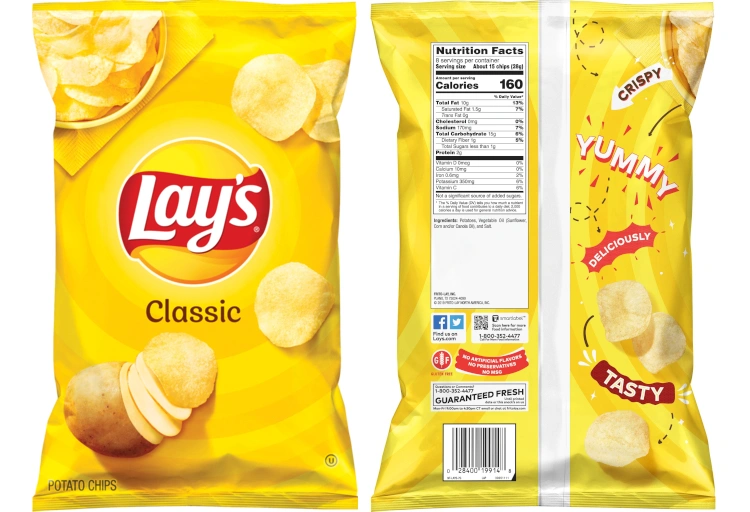
IPP is a polypropylene film produced using down-blowing water-cooled blown film technology. The optical properties and film thickness deviation of IPP film are slightly lower than those of CPP and BOPP, but the process is simple and the cost is low. It can be packaged by simply sealing at the upper and lower ends. The thickness of packaging film is generally 0.03 ~ 0.05mm. Films with excellent strength at low temperatures can be obtained using copolymer resins. The modified IPP film has low-temperature high impact resistance, high slipperiness, high transparency, high impact strength, good toughness, and anti-static properties. It includes a single-layer polypropylene film, which can be a homopolymer or a copolymer; a multi-layer co-extruded blown film, which is generally made from two raw materials: homopolymerized isotactic polypropylene and copolymerized. IPP is mainly used for packaging of fried snacks, bread, textiles, folders, record sleeves, sea vegetables, sports shoes, etc.
The difference between PPR pipe and PPB pipe
What is plastic pellet and what are its main applications?