
PE100 vs PE80 comparison: choosing the right pipe material
Introduction
1. Definition of PE100 and PE80
1.1 PE100
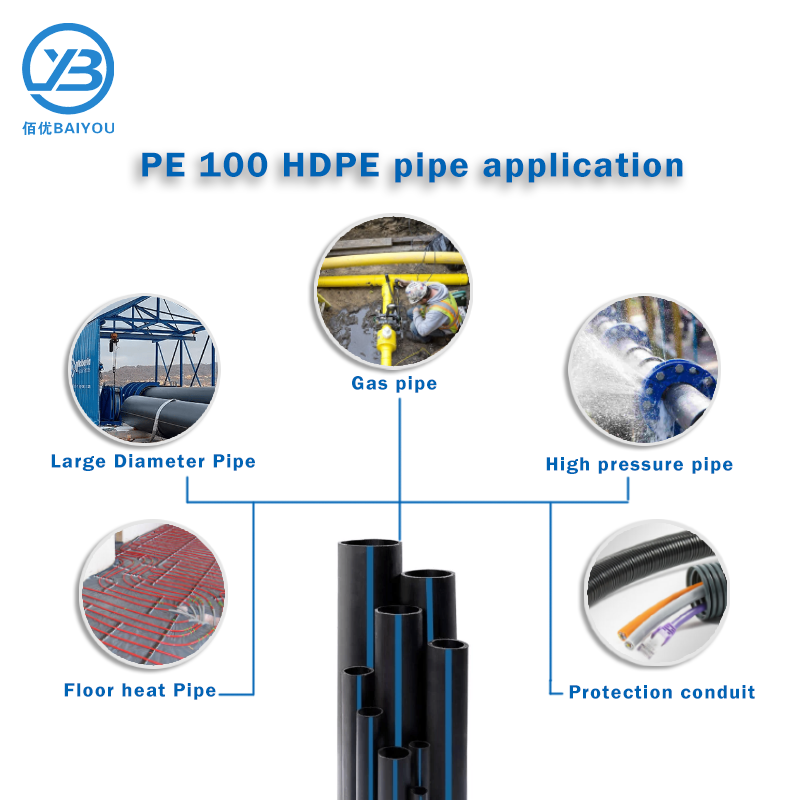
PE100 is a high-performance grade of polyethylene, meaning the material has a higher molecular weight and higher compressive strength. The standard performance of PE100 pipes is usually able to withstand higher internal and external pressures and have a longer service life. PE100 material complies with ISO 4427 standards and can withstand higher working pressures, so it is widely used in pressure piping systems, especially in municipal water supply and gas pipelines.
1.2 PE80
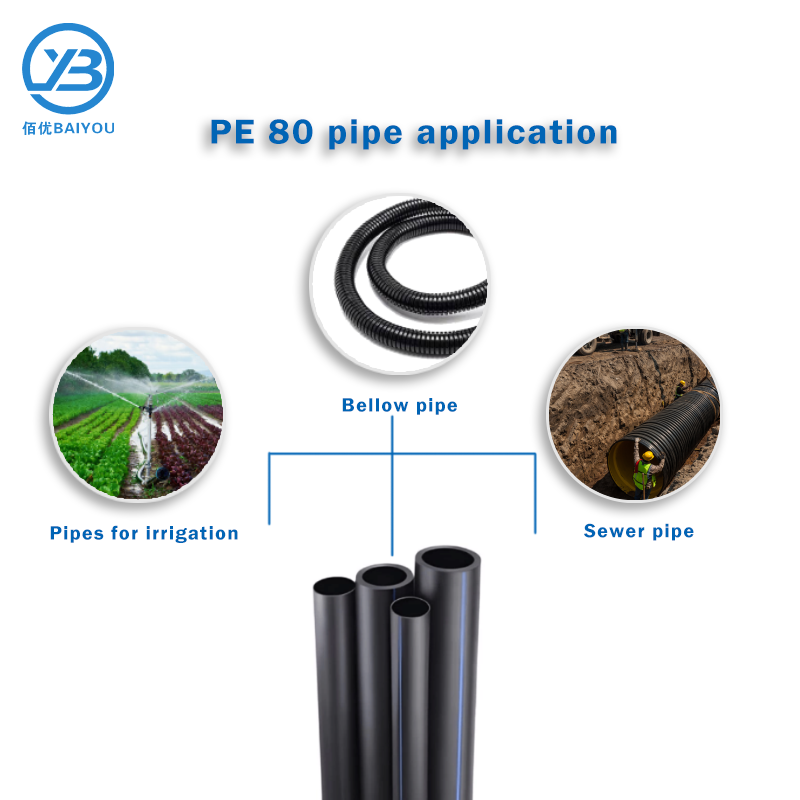
PE80 is another grade of polyethylene, meaning the material has slightly lower compressive strength than PE100. PE80 pipes can still provide good durability and corrosion resistance under certain working pressures. Although PE80 is not as strong and durable as PE100, it is still a suitable choice in some low-pressure environments.
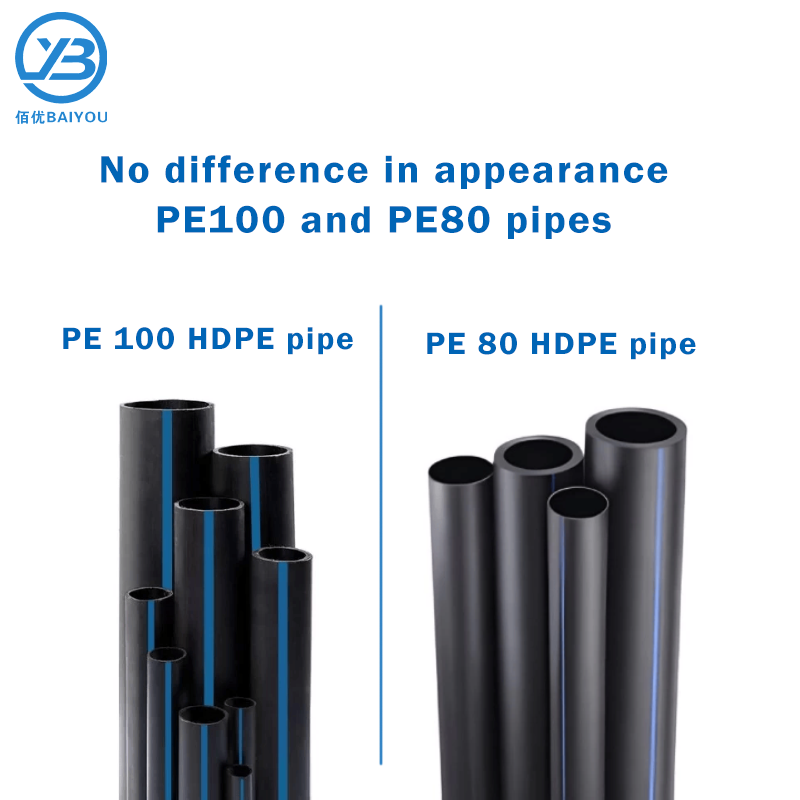
Therefore, you cannot directly observe the difference between PE100 and PE80 pipes in terms of appearance.
2. Performance comparison between PE100 and PE80
2.1 Mechanical properties (compressive strength)
PE100 has a larger molecular weight and a tighter molecular chain structure, so its compressive strength is higher than PE80. The long-term hoop stress strength (MRS, Minimum Required Strength) of PE100 pipe is 10 MPa, while the MRS of PE80 is 8 MPa. This means that PE100 pipes can work stably at higher pressures and are especially suitable for high-pressure water supply and gas pipelines. Although PE80 has lower strength, it can still provide sufficient performance in some low to medium voltage applications.
2.2 Service Life
Due to its higher strength and wear resistance, PE100 pipes generally offer a longer service life. Typically, the design life of PE100 pipes can exceed 50 years under normal operating conditions. PE80 pipes, with their slightly lower strength, have a relatively shorter service life, but they still provide reliable performance for medium- and low-pressure pipelines.
2.3 Chemical Resistance
Both PE100 and PE80 have excellent chemical resistance to most acids, alkalis, salts, and other corrosive substances. They are both suitable for use in a wide range of chemical environments, and there is no significant difference between the two in terms of chemical durability.
2.4 Low Temperature Performance
Polyethylene materials are known for their good toughness at low temperatures. Both PE100 and PE80 maintain excellent impact resistance and flexibility in cold environments, making them suitable for use in colder regions. Although PE100 may offer slight advantages in extreme low temperatures due to its higher molecular structure, both materials perform similarly under most climate conditions.
2.5 Processing and Fabrication
Both PE80 and PE100 offer good processability and can be easily welded, fused, or joined using methods such as heat fusion, socket welding, and butt welding. However, due to its higher pressure resistance and thicker walls, PE100 pipes may require more technical expertise during processing, especially for high-pressure pipeline systems. In contrast, PE80 is often easier to work with for medium- and low-pressure applications.
3. Applications of PE100 and PE80
3.1 PE100 pipe application
3.2 PE80 pipe application
4. Economic Comparison between PE100 and PE80
4.1 Cost Differences
Due to the more advanced production process required for PE100, its material cost is typically higher than that of PE80. However, PE100 pipes' higher pressure resistance and longer service life mean that they are more cost-effective in the long term for high-pressure applications. Although PE80 pipes have a lower initial cost, they may require more frequent maintenance and replacement in high-pressure environments, which can increase their total lifecycle cost.
4.2 Maintenance Costs
PE100, with its higher durability and lower maintenance requirements, tends to reduce the need for frequent repairs or replacements, particularly in high-demand systems. In contrast, PE80 pipes may require more maintenance and replacements, especially in high-pressure applications, leading to potentially higher long-term maintenance costs. Therefore, despite PE80's lower initial cost, its total cost of ownership may be higher in some applications.
5. Choosing Between PE100 and PE80
The decision to choose PE100 or PE80 largely depends on the specific requirements of the project:
-
High-pressure or long service life requirements: If the project involves high operational pressures or long-term durability, PE100 is the ideal choice. It is well-suited for municipal water supply, gas transmission, oil and gas pipelines, and other critical infrastructure where strength and longevity are paramount.
What is the HDPE raw material can be used for PE 100?


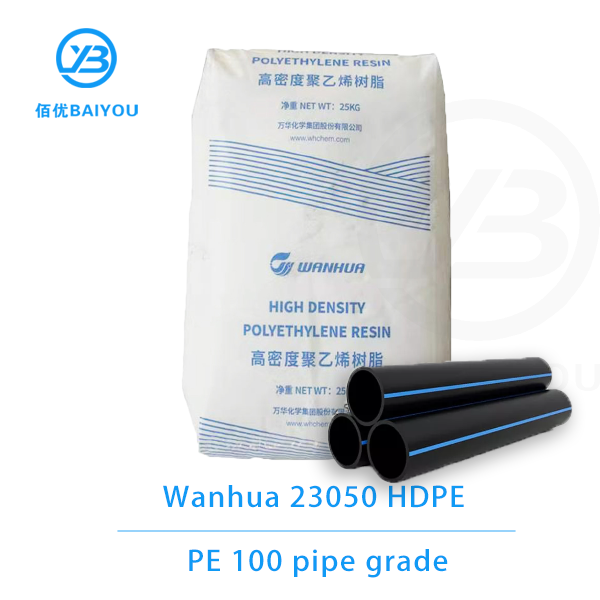
Compared with other products of the same level, YGH041T HDPE has certain price advantages. At the same time, China's higher production efficiency can meet the demand for large-scale products.



Extra-large-diameter PE 100 HDPE
Eltex TUB121N3000 is a high-density polyethylene (HDPE) produced by INEOS O&P Europe specifically for the manufacture of PE100 HDPE pipes. Compared to conventional PE100 HDPE materials, TUB121N3000 HDPE is suitable for producing extra-large-diameter PE100 HDPE pipes, such as industrial piping and main water supply lines.
-
Medium to low-pressure or budget-conscious applications: If the application involves low to medium pressure and the budget is a key consideration, PE80 can offer a cost-effective solution. It is well-suited for residential water supply, irrigation systems, and drainage pipes where pressure requirements are less demanding.
Conclusion
PE100 and PE80 are both excellent polyethylene materials, but they are suited to different types of projects based on pressure ratings, service life, and cost considerations. PE100 offers superior strength, pressure resistance, and durability, making it the preferred choice for high-pressure and long-term applications. PE80, on the other hand, provides a more budget-friendly option for medium- and low-pressure systems. By understanding the differences between these two grades, users can make an informed decision about which material best meets the needs of their specific pipeline project.
Introduction for LLDPE SABIC 219NJ
Introduction for LLDPE SABIC 218BJ