
• image English
    • image Español
    • image Pусский
    • image Portugues
    • image Français
    qr Code Url

    Scan qrcode to view mobile website

    Member Center
    Exit
    Data is empty
    0

    Get Free Quotation

    Home /News /Engineering plastics /Selection of Celanese Hostaform POM-C Material /

    Selection of Celanese Hostaform POM-C Material

    2026-08-25
    Hostaform is a polyactal copolymer produced by Celanese Corporation, polymerized from formaldehyde and other materials; it is also known as “POM-C material.”
    Compared to Delrin POM-H, Hostaform POM-C offers advantages such as ease of processing, a wider processing temperature range, and good surface appearance, as well as excellent wear resistance, lubricity, and fatigue resistance; Consequently, it is frequently used in applications such as gears, bearings, and sliders that demand high levels of lubricity and wear resistance.
    For material procurement professionals and designers, the real challenge lies not in whether to choose Hostaform POM material, but in selecting the appropriate material based on load, friction, dimensional accuracy, machining methods, and the operating environment.

    1. Why Choose Hostaform POM-C

    1.1 Low Water Absorption and Dimensional Stability

    Compared to engineering plastics such as polyamide, which are known for their significant moisture absorption, Hostaform POM-C has a water absorption rate of only about 0.2%, making it particularly suitable for precision parts used in humid environments where minimal dimensional changes are required.

    1.2 Excellent Wear Resistance and Lubrication Properties

    The greatest advantage of Hostaform POM lies in its excellent self-lubricating properties and low wear, making it suitable for parts subjected to repeated friction and long-term relative motion.

    1.3 High Rigidity and Strength

    Hostaform POM-C, a commonly used engineering plastic, offers high strength and rigidity and maintains good mechanical properties across a wide temperature range.

    2. Selection of Standard Hostaform POM Materials
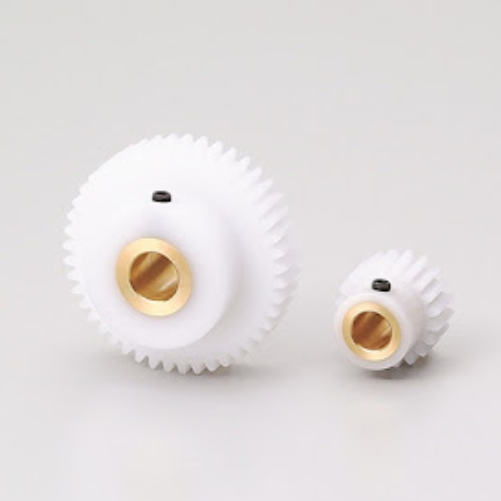
    The main difference in standard Hostaform POM lies in its flow properties; due to these differences in flow, adjustments to the processing methods are required.
    POM gears

    Hostaform C 13031 is a low-viscosity, high-flow, general-purpose POM material that offers a 10% increase in strength and stiffness compared to the more commonly used POM, Hostaform C 13021.

    Hostaform POM C 13031 has a melt flow index (MFI or MFR) of 12 cm³/10 min at 190°C and 2.16 kg. It is commonly used in injection molding and is often used to produce precision, small parts.
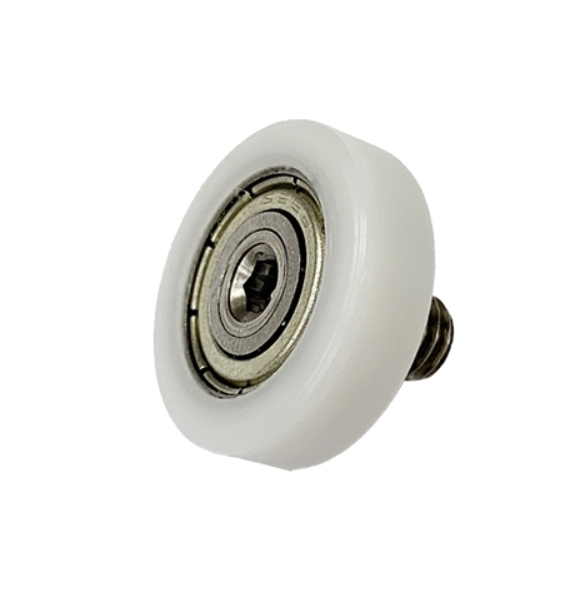
    POM bearing

    Hostaform C 9021 POM is a medium-viscosity polyoxymethylene material with a melt flow index of 9 cm³ at 190°C under a load of 2.16 kg, making it suitable for the vast majority of applications.

    Due to its higher molecular weight structure, Hostaform C 9021 offers greater strength, stiffness, and load-bearing capacity compared to the high-flow C 13031 POM. It is suitable for applications requiring a certain level of load-bearing capacity, such as bearings, high-load gears, and structural components.

    3. Selecting Reinforced Hostaform POM

    3. 1 GF/GB-Reinforced Hostaform POM
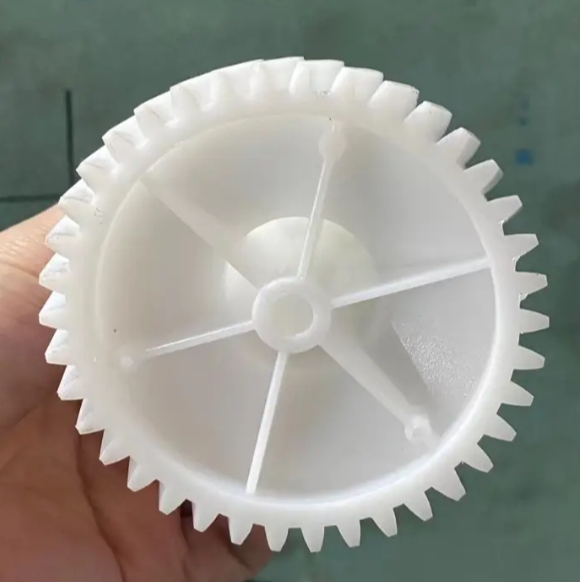
    GF10 POM
    GF POM, or glass-fiber-reinforced polyoxymethylene, effectively enhances the rigidity, strength, and creep resistance of POM. It is suitable for structural components, gears, brackets, and other parts subjected to long-term loading, and is commonly used in the production of automotive and mechanical components.
    However, GF POM can reduce the material’s toughness, result in a noticeably rough surface, and decrease the wear resistance of molds; therefore, it should be selected with caution.
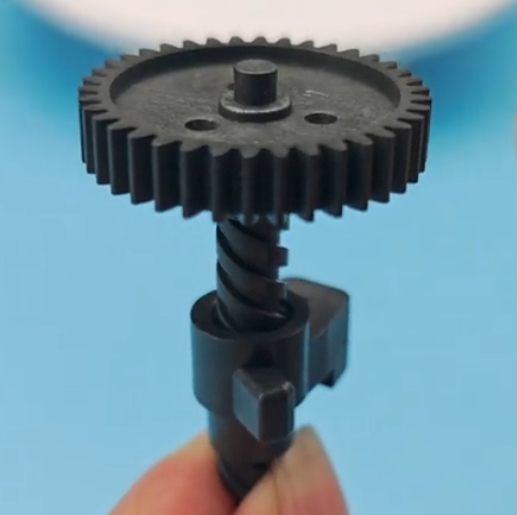
    The standard naming convention for Hostaform’s glass-fiber-reinforced POM grades is Hostaform C 9021 GV1/**, which indicates that the material is based on Hostaform C 9021 POM and contains ** percent glass fiber. For example, Hostaform C 9021 GV1/30 refers to a material containing 30 percent glass fiber.
    Hostaform C 9021 GV3/** refers to C9021 POM containing ** of glass microspheres. Compared to glass-fiber-reinforced POM, it offers an improved surface feel—it is smoother—and enhanced orientation, which effectively reduces warpage defects.
     3. 2 MOS₂ Reinforced Hostaform POM
    MOS2 HOSTAFROM C9021 M gearing

    Molybdenum disulfide (MoS₂)-reinforced POM, also known as MOS₂ POM, improves the material’s friction and wear resistance. It is better suited for dry-friction applications and long-term dynamic load applications, such as long-term meshing between the finished product and a metal or plastic gear.

    Since molybdenum disulfide is a solid lubricant material with a grayish-black appearance, finished products are typically black.


    3. 3 PTFE-Reinforced Hostaform POM
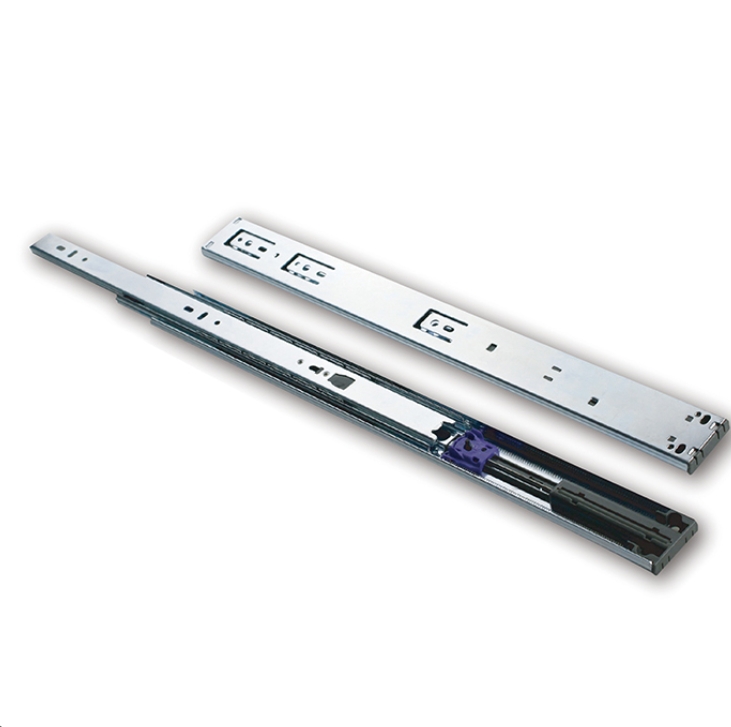
    POM Drawer Slides
    PTFE, also known as polytetrafluoroethylene, is used to reinforce Hostaform POM material. This reinforcement effectively reduces the material’s coefficient of friction and enhances its wear resistance. Compared to MoS₂-reinforced POM, it is better suited for low-friction applications under non-load-bearing conditions; that is, it is not suitable for applications requiring high load-bearing capacity, but is ideal for low-friction environments such as sliders and guide rails.

    4. Selecting Hostaform POM Materials for Special Applications

    4. 1 Automotive Applications
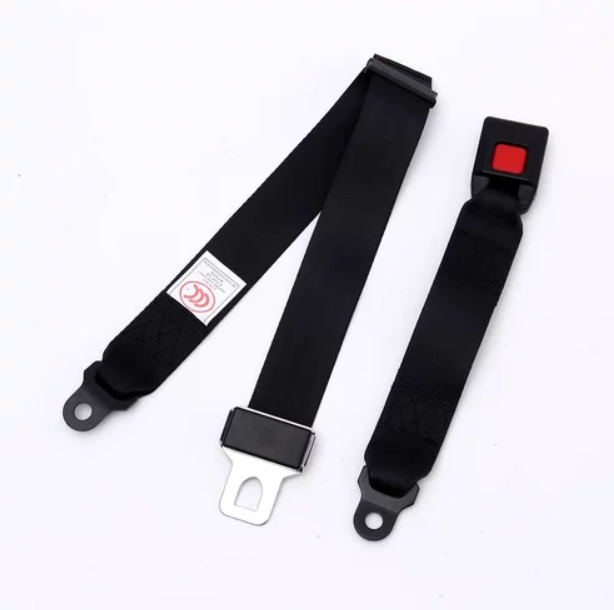
    Automotive seat belt buckles made of POM

    POM-C is widely used in automotive applications due to its excellent lubricating properties; however, the enclosed spaces inside vehicles can cause significant odor buildup in POM-C materials. To address this issue, Celanese Corporation has introduced the Hostaform XAP series, which features ultra-low VOC emissions.

    Hostaform XAP² POM reduces the release of harmful substances by more than 50% compared to Hostaform XAP¹ POM, with VDA 275 < 2 mg/kg, and is already in use by numerous automakers, including Mercedes-Benz, Renault, the Volkswagen Group, Ford, General Motors, Geely, Dongfeng Motor, and Chery.

    To meet stricter environmental and performance requirements, Celanese has partnered with Li Auto, a leading Chinese manufacturer of new energy vehicles, to develop Hostaform XAP³, which reduces formaldehyde emissions by more than 90% compared to current mainstream POM materials, with VDA 275 < 1 mg/kg.

    4. 2 Medical Applications
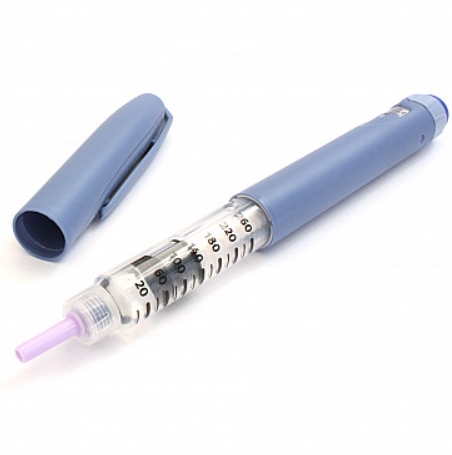
    Automatic injection pen made of POM material

    Due to its excellent wear resistance and lubricity, POM-C is widely used in moving parts of reciprocating machinery, such as syringe assemblies, infusion pumps, surgical clamps, prosthetic joints, and fluid-handling pump heads.

    Hostaform MT medical-grade POM material was developed specifically for medical device applications. The material complies with ISO 10993 biocompatibility and meets the certification requirements for ethylene oxide sterilization (EtO), high-energy radiation sterilization, high-temperature steam sterilization, drug master files, and USP Class VI, ensuring it is safe for use in medical applications.

    Reference Documents


    1. Celanese, Hostaform C 9021 XAP 2 technical data sheet (TDS), Celanese corporation, 25/08/2026
    2. Celanese, Celanese and Li Auto Collaborate to Advance Ultra-Low Emission Innovation in New Energy Vehicles, Celanese corporation, 25/08/2026
    3. Celanese, Acetal Copolymer Medical Grade Hostaform MT POM , Celanese corporation, 25/08/2026
    4. Celanese, Hostaform_Broschuere, Celanese corporation, 25/08/2026

    Share:

    Zytel ST Super toughened Nylon

    Stress Cracking in Polycarbonate

    Ask a quote for the latest price and one of our team members will respond as soon as possible. Fields marked with * are required.

    Quote For The Latest Price

    SiteMap

    mainly export PP, PE, PC, POM, EVA, ABS, PS, PET plastic raw material granules, which are used in making FIBC bags, office equipment, home appliances, auto parts, agricultural products, pipes and other fields.

    Products

    PP

    PE

    EVA

    PC

    ABS

    PS

    PET

    POM

    Get In Touch

    Telephone:0379—64627811

    WhatsApp:+86 15837933829

    Email:info@polyhdpe.com

    Address:Room 2505, Building 2#, Yinkun Science and Technology Park, Fenghua Road, Luoyang City, Henan Province, China

    © Copyright 2022 Pon Pure Chemicals Group | All Rights Reserved

    (420259)
    0
    Service

    Inquiry
    Inquiry
    WhatsApp
    8615837933829
    Top