• image English
    • image Español
    • image Pусский
    • image Portugues
    • image Français
    qr Code Url

    Scan qrcode to view mobile website

    Member Center
    Exit
    Data is empty
    0

    Get Free Quotation

    Home /News /General plastics /How to distinguish PE from PP, PC, PVC, PET and other plastic particles /

    How to distinguish PE from PP, PC, PVC, PET and other plastic particles

    2024-04-02

    How to distinguish PE from PP, PC, PVC, PET and other plastic particles

    Plastic is a common material in life. Depending on the characteristics of each plastic resin, it is used in different applications. Let’s take a look at how to distinguish PE from PP, PC, PVC, PET and other plastic particles.

    The first method: distinguish PE, PP, PVC, PC, PET plastic particles by symbols

    When purchasing plastic products, you will see triangle symbols and numbers on the bottom of the box. What does this symbol mean? Simply put, these symbols mark the characteristics of each plastic, in addition to facilitating material recycling, also you will know how to use it to ensure safety and health. We'll learn more about it below:
    plastic number symbol

    1. PET plastic

    Polyethylene terephthalate (PET material or PETE material) is a thermoplastic polymer known for its high transparency. It is commonly used in packaging for food, pharmaceuticals, and chemicals. Examples include water bottles, carbonated beverage containers, and cooking oil jugs.

    However, it is important to note that PET is not heat-resistant. Exposure to high temperatures can cause deformation of containers and release toxic substances. Therefore, it should not be used for storing hot liquids.

    2. HDPE plastic

    High density polyethylene, also known as HDPE material, is a thermoplastic polymer material processed from ethylene monomers. It features a high strength-to-density ratio and chemical resistance, commonly used in the production of detergent bottles, chemical containers, pharmaceutical bottles, geomembranes, PE100 HDPE pipes, and PE80 pipes. 

    3. PVC plastic

    Polyvinyl chloride (PVC) is a polymer material produced through the polymerization of vinyl chloride. Its global consumption ranks third only to polyethylene and polypropylene.
    PVC products on the market primarily come in two forms: rigid PVC, commonly used for manufacturing PVC pipes; and flexible PVC, which has a sticky feel.
    Due to PVC's relatively low hardness, white creases often appear when it is bent.

    4. LDPE plastic

    plastic no.4 low density polyethylene LDPE
    In contrast to high-density polyethylene (HDPE) is low-density polyethylene (LDPE), a material also formed through the copolymerization of ethylene monomers, characterized by its lower density.
    Compared to HDPE, LDPE offers superior flexibility, higher transparency, and a smoother texture. It is commonly used in the production of film products such as plastic packaging bags.
    It is important to note that LDPE based cling film products should be used with caution in high-temperature environments unless explicitly labeled as safe for high temperatures or microwave use. Ordinary LDPE film products generate toxic and harmful substances when exposed to high temperatures.

    5. PP plastic

    Polypropylene (PP) is one of the most widely used plastics globally. Processed from propylene monomers, it offers excellent impact resistance, flexibility, and moderate transparency. PP resin is commonly used to manufacture disposable tableware, disposable bubble tea cups, woven bags, and bulk bags.
    Although PP resin offers a significant price advantage, its performance is generally mediocre and its applications are limited. In recent years, scientists have employed various techniques—such as copolymerization with multiple polymers, glass fiber reinforced PP (GF reinforced PP), incorporating conductive components, and blending with other polymers—to retain PP's cost-effectiveness while addressing its drawbacks: poor high-temperature resistance, inadequate weatherability, and low strength.

    6. PS plastic

    plastic no.6 polystyrene PS resin
    Polystyrene is a transparent thermoplastic with a brittle texture and excellent dyeability. Due to its favorable foaming properties, expanded polystyrene is commonly used to produce foam products such as soundproofing panels, insulated walls, instant noodle containers, and egg cartons.
    Other classifications include general-purpose polystyrene (GPPS material), suitable for refrigerator trays and toys; and high-impact modified polystyrene (HIPS material), used for toys and yogurt containers.
    Note that this material exhibits poor high-temperature resistance. It is not recommended for use in high-temperature environments or areas with significant oil contamination, as it may release toxic substances under such conditions.

    7. Other plastic

    Plastics come in a wide variety. Beyond the common classifications mentioned above, all others fall under the "other" category.
    Other types of plastics commonly encountered in daily life include polycarbonate resin (PC material), primarily used for producing sports water bottles, and polysulfone resin (PPSU), used for manufacturing baby bottles.
    PC resin boasts exceptional transparency, light transmission, and impact resistance, making it ideal for automotive lamp covers, transparent appliance housings, and sports water bottles. However, one of its primary raw materials—bisphenol A (BPA)—is a highly carcinogenic substance prone to leaching at elevated temperatures. Therefore, avoid using PC resin products in high-heat environments.
    Transparent PPSU resin is commonly used in baby bottle manufacturing. It possesses exceptional high-temperature resistance, complies with FDA 21 CFR food certification requirements, maintains stable performance under high temperatures, and exhibits minimal leaching of harmful substances.


    Second method: distinguish PE, PP, PVC, PC, PET plastic particles through combustion

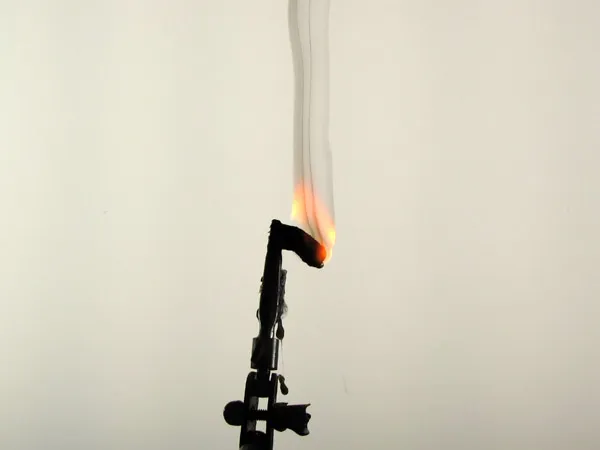
    Burning is the easiest way to identify plastic particles. If there is no burning smell when burning, it is PE or PP plastic. Compared to PVC, it will not burn. As for PET plastic, there will be a burning smell and black smoke.
    pvc material can't burn

    Burning test of PVC material

    The picture on the left is the combustion test of PVC raw material.
    It can be clearly seen that PVC material cannot burn and cannot be ignited even in high temperature environments. This is the flame retardant property of PVC material, so PVC material is suitable for electronic equipment and office equipment parts. , home appliance parts and other application scenarios that have high requirements for temperature, flame retardancy and insulation.
     
    PET plastic burn test

    Bruning test of PET material

    The picture on the left is the combustion test of PET material
    It can be clearly seen that PET raw material can be quickly ignited in high-temperature environments and release black smoke, leaving gray-black particle ash after burning. This indicates that PET products are not suitable for use in high-temperature environments and may Can cause product damage and release toxic substances

    The third method: distinguish PE, PP, PVC, PC, PET plastic particles through outstanding characteristics

    PE plastic

    PE plastic beads are transparent in color, have a translucent luster inside, and have a smooth and shiny surface, making them suitable for products with high aesthetic requirements.
    PE plastic has high heat resistance in a short period of time. This plastic resin is very moisture-resistant but less breathable. Therefore, if you store food in PE packaging, you will feel an unpleasant smell in the packaging after a while.

    PP plastic

    PP plastic has high mechanical strength and solid molecular structure. The surface is shiny, the printing is very clear, and the colors are beautiful. PP plastic is resistant to gas and water vapor.
    However, this plastic pellet has poor heat resistance. PP plastic is easily broken at low temperatures and easily damaged when exposed to the external environment for a long time.

    PVC plastic

    PVC plastic particles are very brittle and are often used to make raincoats, cable covers, etc. There are still some food containers made of PVC plastic. To increase the flexibility of the finished product, manufacturers often add PP or PE plastic. However, PVC containers should only be used for raw food and short-term use.

    PC plastic

    PC plastic particles have transparent color, high durability, good wear resistance and chemical resistance. In addition, PC plastic is heat-resistant to over 100 degrees Celsius and has high breathability. Therefore, these plastic beads are often used as containers and lids for sterilized products.

    PET plastic

    PET plastic pellets, also known as PETE, have high durability and good impact resistance. PET plastic has low thermal stability, so its use in high-temperature environments should be limited. In addition, PET plastic is easily oxidized.
    Share:

    What is the differences between general plastics, engineering plastics and special plastics?

    What is ABS/PC Alloy?

    Ask a quote for the latest price and one of our team members will respond as soon as possible. Fields marked with * are required.

    Quote For The Latest Price

    SiteMap

    mainly export PP, PE, PC, POM, EVA, ABS, PS, PET plastic raw material granules, which are used in making FIBC bags, office equipment, home appliances, auto parts, agricultural products, pipes and other fields.

    Products

    PP

    PE

    EVA

    PC

    ABS

    PS

    PET

    POM

    Get In Touch

    Telephone:0379—64627811

    WhatsApp:+86 15837933829

    Email:info@polyhdpe.com

    Address:Room 2505, Building 2#, Yinkun Science and Technology Park, Fenghua Road, Luoyang City, Henan Province, China

    © Copyright 2022 Pon Pure Chemicals Group | All Rights Reserved

    (420259)
    0
    Service

    Inquiry
    Inquiry
    WhatsApp
    8615837933829
    Top