
The difference between PPR pipe and PPB pipe
2024-06-20
Definition of PPR and PPB
PPR is the abbreviation of tripropylene, also known as random copolymer polypropylene pipe. It adopts hot-melt welding, has special welding and cutting tools, and has high plasticity. PPR water pipes are matte white or matte in other colors, while pseudo-PPR water pipes are bright or particularly bright in color. PPR water pipes are completely opaque, while pseudo-PPR water pipes are slightly translucent or semi-translucent.
PPB is a block copolymer polypropylene pipe made of propylene and ethylene block copolymers, with appropriate amount of additives, and extruded into a thermoplastic heating pipe.
PPB is a block copolymer polypropylene pipe made of propylene and ethylene block copolymers, with appropriate amount of additives, and extruded into a thermoplastic heating pipe.
The difference in appearance between PPR pipes and PPB pipes
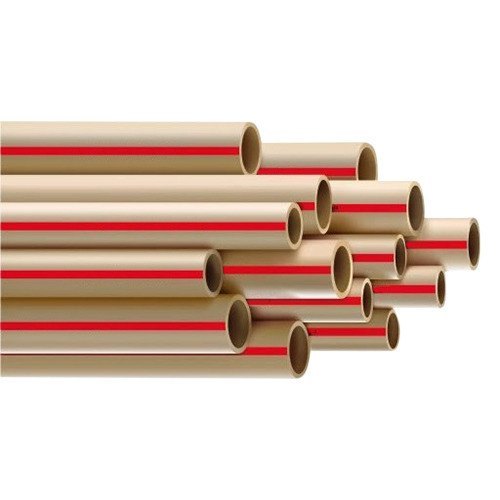
Random copolymer polypropylene (PPR):
- General low-temperature impact resistance (0℃), good creep resistance at high temperature, and applicable temperature range of 0-80℃.
- Due to its good high temperature resistance, it is often used as a raw material for high temperature water pipes.
- Compared with PPB, its most important appearance is the red lines on the pipe, as shown on the left
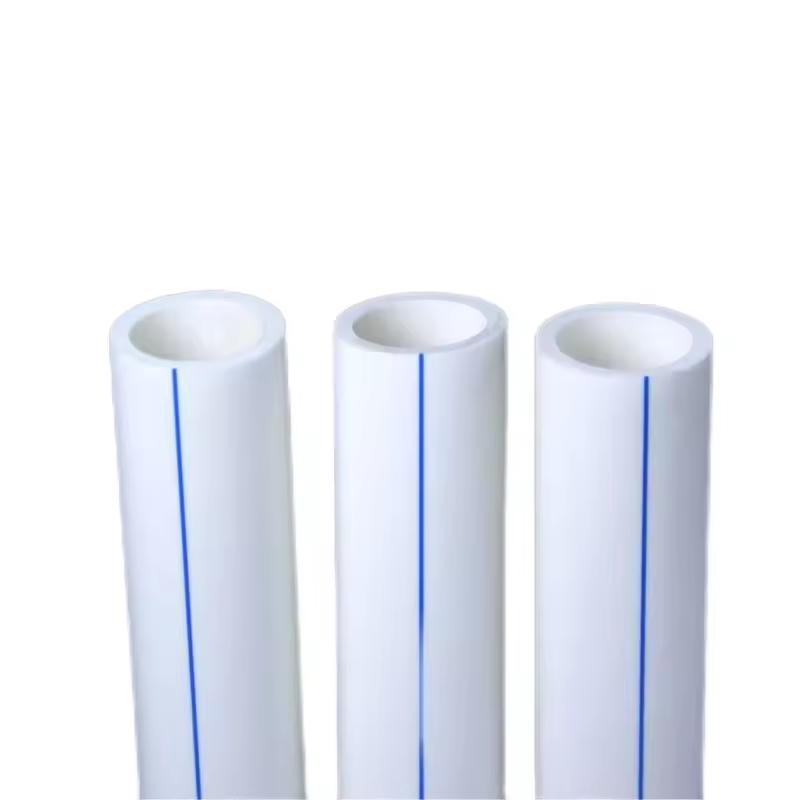
Block copolymer polypropylene (PPB):
- Good low-temperature impact resistance, low-temperature brittle point of -5℃, poor high temperature resistance, and applicable temperature range of 0-60℃.
- Due to its relatively low cost and high pressure-bearing capacity, it is often used as a raw material for general non-hot water pipes.
- Compared with PPR pipes, its appearance is blue lines printed on the surface of the pipe, as shown on the left
PPR and PPB pipe different application areas
PPR pipes are mainly used in
- Hot and cold water systems of buildings, including central heating systems;
- Heating systems in buildings, including floors, wall panels and radiant heating systems;
- Pure water supply systems that can be directly drunk;
- Central (central) air conditioning systems;
- Industrial pipeline systems such as conveying or discharging chemical media.
PPR pipes are currently the most economical and practical products for water supply pipelines. At present, the Ministry of Construction of the People's Republic of China is vigorously promoting their use, and household water pipes are now basically PPR water supply pipes.
PPR pipes are suitable for media: aqueous solutions of inorganic salts, dilute or concentrated solutions of inorganic acids and alkalis.
PPR pipes are suitable for media: aqueous solutions of inorganic salts, dilute or concentrated solutions of inorganic acids and alkalis.
- Working temperature: ≤100℃.
- Features: It is one of the lightest plastics, and its yield, tensile and compressive strengths and hardness are better than low-pressure polyethylene.
- It has outstanding rigidity, good heat resistance, easy molding, and low price.
- After modification, the impact resistance, fluidity, and bending elastic modulus are improved.
PPB pipes are also commonly known as hot melt pipes. PPB pipes are suitable for cold water use. Although they are also suitable for hot water, they are not suitable for long-term high temperature use.
If PPB material is used for hot water pipes, in an average household, the pipes will continue to expand thermally and cannot be restored, and bend and deform, and even cause the buried pipe wall to arch and crack.
PPB pipe is a kind of hot and cold water pipe, which is relatively cheap. Its heat resistance and pressure resistance are very different from PPR.
PPR and PPB pipe different characteristics
PPR pipes are moderately priced, stable in performance, heat-resistant and heat-insulating, corrosion-resistant, smooth and scale-free inner wall, safe and reliable pipeline system, and impermeable, with a service life of up to 50 years. However, the construction technology requirements are high, and special tools and professionals are required for construction to ensure the safety of the system.
PPB pipe is one of the lightest plastics, and its yield, tensile and compressive strength and hardness are better than low-pressure polyethylene. It has outstanding rigidity, good heat resistance, easy molding, and low price. After modification, the impact resistance, fluidity, and bending elastic modulus are improved.
Recommended PP raw materials for PPB and PPR pipes
PP pellets for PPR pipe
Borouge RA140E is a PP raw material used in the manufacture of hot water pipes and PPR PIPE.
It is PP pellet with high temperature resistance, high impact resistance, easy processing, and environmentally friendly characteristics. Borouge RA140e is a good PP raw material for manufacturing hot water pipes and PPR pipes.

Hyosung R200P is a PP raw material used in the manufacture of hot water pipes and PPR PIPE.
This is a heat-stable extrusion molding PP material with the characteristics of high temperature resistance, strong impact resistance, drinking water contact grade PP pellets and environmental friendliness. Hyosung R200P is commonly used in high-temperature water pipe applications.

Yuhwa RP2400 is a kind of PP pellets that are resistant to high temperature and ultra-high pressure.
It is available in white, green, gray and other colors.Yuhwa RP2400 PP pellets advantageous in countries that use green as the color of drinking water pipelines, and there is no need to add additional color masterbatch.
Yuhwa RP2400 used to make floor heating PPR pipes, PPR fittings.

PP pellets for PPB pipe
Borouge BA212E is a PP raw material used in the manufacture of pressure-free cold water pipes.
It has the advantages of high impact resistance and high rigidity. Borouge BA212E PP pellets finished products are easy to shape, have good processing advantages, and are fully recyclable PP pellets.

What are the classifications of polypropylene films?