• image English
    • image Español
    • image Pусский
    • image Portugues
    • image Français
    qr Code Url

    Scan qrcode to view mobile website

    Member Center
    Exit
    Data is empty
    0

    Get Free Quotation

    Home /News /Engineering plastics /Why ABS is commonly used in electroplated application /

    Why ABS is commonly used in electroplated application

    2026-10-20
    Electroplated ABS plastic is a widely used surface finishing technique that combines the lightweight, design flexibility, and cost advantages of plastic with the aesthetic qualities of metal. From automotive interior and exterior trim to showerheads, faucets, and appliance handles, electroplated ABS is widely used in these applications.
    However, not all ABS materials provide good plating results; selecting ABS with the appropriate plating grade is crucial for achieving a stable, durable, and uniform plated layer.
    This article will explain in detail what electroplated ABS is, how ABS materials are electroplated, and which materials should be selected.

    1. What Is Electroplated ABS Plastic?

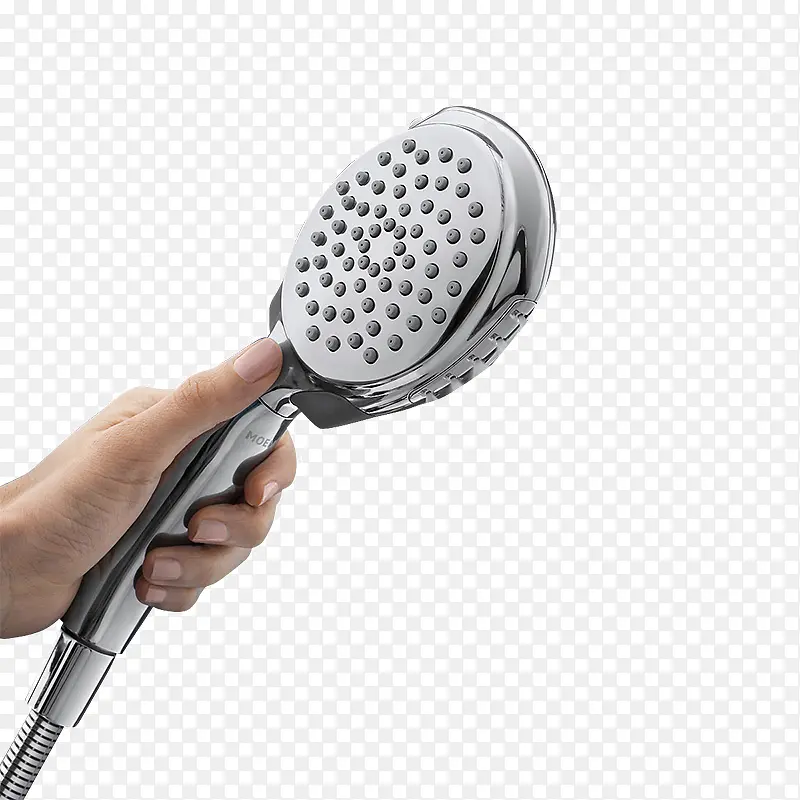
    Electroplated ABS Plastic Showerhead
    Electroplated ABS is a surface treatment technology that involves depositing a metallic electroplated layer onto acrylonitrile-butadiene-styrene (ABS) plastic components, giving the finished product a metallic luster and appearance.
    ABS plastic is an electrically insulating thermoplastic; therefore, unlike traditional metal parts, it cannot be electroplated directly. It must first undergo chemical treatment, followed by metallization, to achieve the electroplating effect.

    2. Why Is ABS Plastic Widely Used in Electroplating?

    ABS plastic is widely used in decorative plating applications due to its favorable plating results, good impact resistance, and excellent cost-effectiveness.

    2.1 Excellent Electroplating Adhesion

    Compared to other electroplated plastic materials, electroplating-grade ABS offers superior adhesion. This is due to the molecular structure of ABS: after chemical etching, the acrylonitrile phase in ABS forms a dense network of tiny pores and undergoes structural changes, enabling the subsequent metal deposit layer to form a mechanically anchored bond.

    2.2 Weight Reduction

    Compared to metal materials, electroplated ABS effectively reduces product weight while maintaining a metallic finish, which is particularly important in today’s automotive, home appliance, and consumer product designs.

    2.3 Cost Advantage

    Large-scale injection molding offers cost advantages in product manufacturing, and the material itself is less expensive than typical metals.

    3. ABS Plating Process
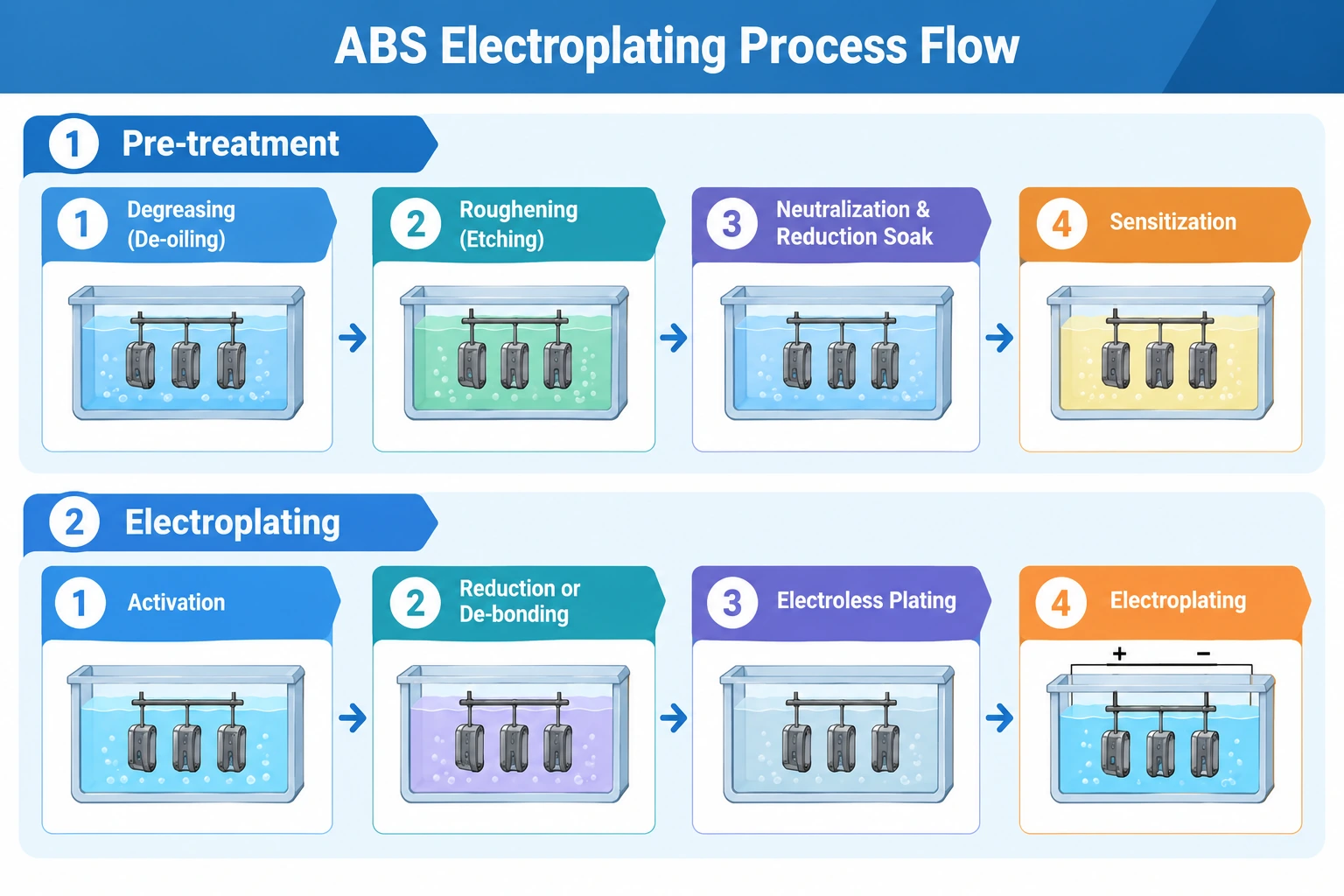
    The reason ABS is widely used in electroplating applications is that the butadiene rubber phase in ABS can be etched by an etchant to form a microporous structure. The metal deposit layer formed by the electroplating chemicals bonds tightly to this microporous structure on the plastic surface, enhancing the adhesion of the plated layer and preventing process defects such as delamination and bubbling in plastic electroplating.
    The following is a detailed explanation of the ABS electroplating process.
    ABS electroplating process
    Because plastic materials are inherently non-conductive, they cannot be electroplated directly like metals; instead, they require a series of pretreatment processes before electroplating.

    3.1 Pretreatment of ABS for Electroplating

    It primarily includes the following processes: degreasing, roughening, neutralization and reduction, acid pickling, and sensitization. The purpose is to remove contaminants generated during the manufacturing process and to create a microporous structure on the surface; the neutralization step serves to remove chemical residues from the cleaning process and prevent them from affecting subsequent electroplating.

    3.2 Catalysis and Activation

    Before ABS electroplating, a catalytically active metal layer must be deposited onto the surface of the ABS product. The surface must then be cleaned and reduced to remove any residual surface activator solution, thereby preventing the ABS from reacting chemically with the metal plating layer during the electroless plating process.

    3.3 ABS Electroplating

    A continuous thin layer of metal is deposited through a chemical reduction reaction, imparting electrical conductivity to the originally non-conductive plastic surface.

    3.4 ABS Plating

    Metal layers are deposited onto the underlying conductive metal to achieve the desired appearance, corrosion resistance, and surface properties.

    4. Recommendations for Electroplating-Compatible ABS Materials

    As a distributor with 20+ years of experience supplying ABS resin, Luoyang Baiyou recommends the following ABS materials—which we frequently sell—for electroplating applications:
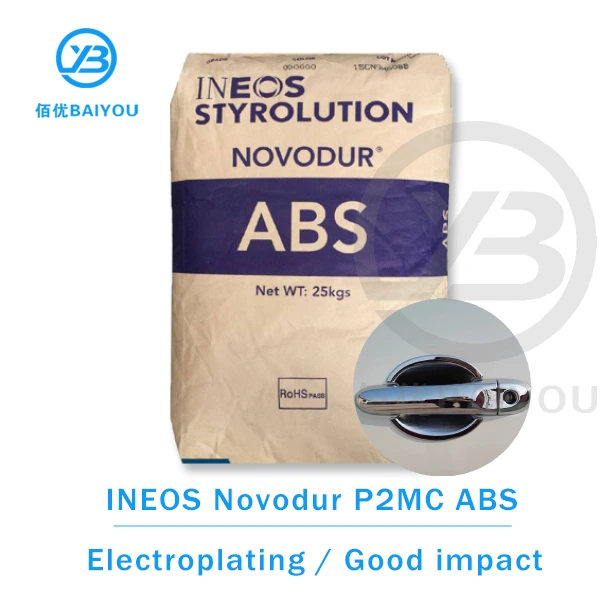
    INEOS NOVODUR P2MC ABS

    Novodur P2MC ABS, produced by the INEOS Styrolution Group, is an officially certified plastic material known for its excellent electroplating properties—particularly for high-gloss chrome plating—and is used in the manufacture of automotive door handles, showerheads, faucets, and other bathroom fixtures.
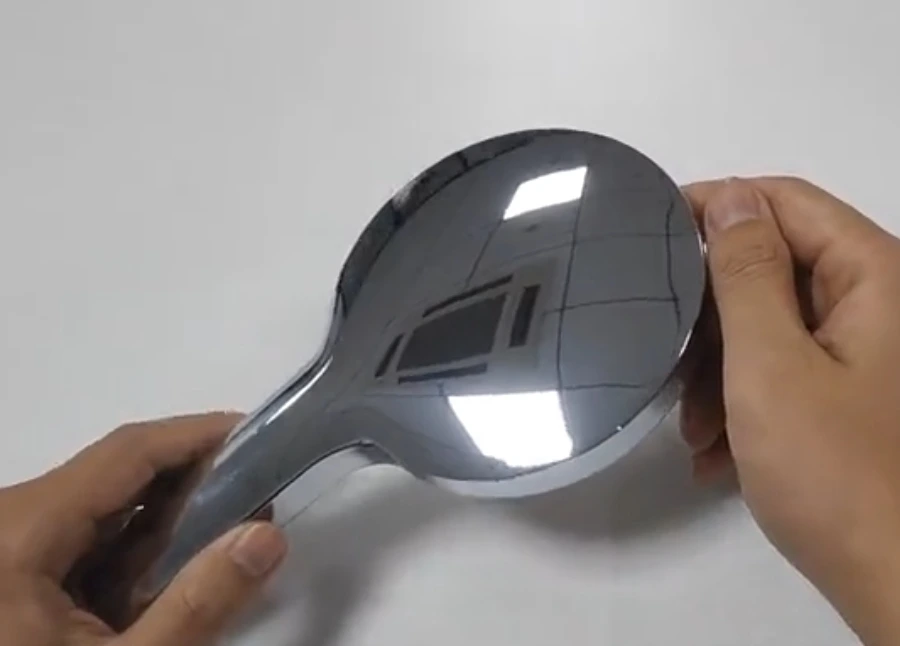
    showerhead produced by INEOS GP22

    INEOS Terluran ABS GP22 and GP35, manufactured by INEOS Styrolution Advanced Materials (Ningbo) Pte. Ltd., are ABS materials widely used around the world. Although these materials are not specifically designated for electroplating applications, our customers have reported that INEOS GP22 ABS and GP35 ABS deliver excellent electroplating results.

    As shown in the figure on the left, showerhead made from INEOS GP-22 ABS, remains shiny even after prolonged use, and the plating has not peeled off.

    ⚠️Terluran GP22 and GP35 ABS are materials supplied directly from INEOS factory, and we can provide complete product certification documents.
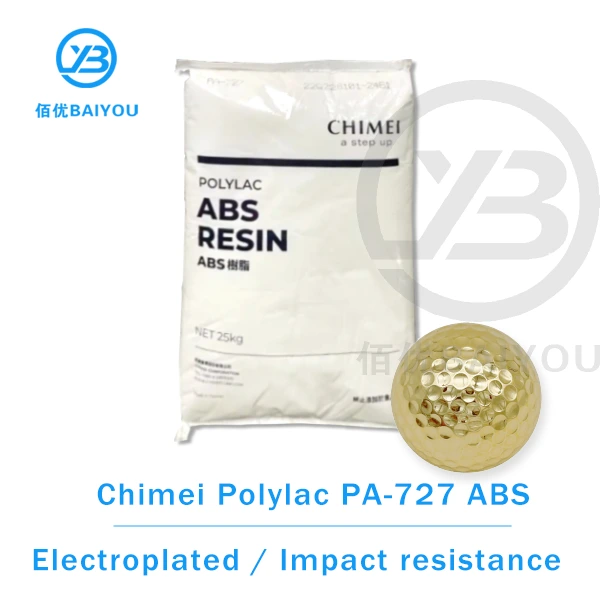
    Chimei polylac pa 727 electroplating abs
    Chimei Polylac PA-727 ABS

    Chimei PA-727 is an ABS material specifically designed for electroplating applications. It forms a smooth, durable electroplated finish and offers moderate impact resistance. With a melt index of 19 and moderate flow rate, it is suitable for conventional injection molding processes. As Chi Mei Corporation's best-selling product, it is always in stock and is currently manufactured exclusively in Taiwan.


    References and Notes

    1. Chimei,"Chimei electroplating ABS Polylac PA-727 technical data sheet", Chi Mei Corporation, 26/10/2026
    2. ab,"A Comprehensive Analysis of the ABS Plating Process", 艾邦智造, 26/10/2026
    3. INEOS ,"INEOS Styrolution enhances product portfolios for its focus industries", INEOS Styrolution, 26/10/2026
    Share:

    Laperos LCP resin Overview

    Ask a quote for the latest price and one of our team members will respond as soon as possible. Fields marked with * are required.

    Quote For The Latest Price

    SiteMap

    mainly export PP, PE, PC, POM, EVA, ABS, PS, PET plastic raw material granules, which are used in making FIBC bags, office equipment, home appliances, auto parts, agricultural products, pipes and other fields.

    Products

    PP

    PE

    EVA

    PC

    ABS

    PS

    PET

    POM

    Get In Touch

    Telephone:0379—64627811

    WhatsApp:+86 15837933829

    Email:info@polyhdpe.com

    Address:Room 2505, Building 2#, Yinkun Science and Technology Park, Fenghua Road, Luoyang City, Henan Province, China

    © Copyright 2022 Pon Pure Chemicals Group | All Rights Reserved

    (420259)
    0
    Service

    Inquiry
    Inquiry
    WhatsApp
    8615837933829
    Top